
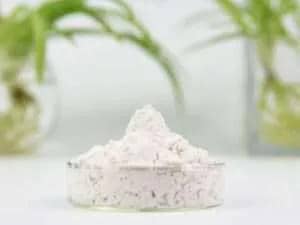
Magnolol

Plamed Vision: Become the leader of natural cosmetic ingredients for sensitive skin.

Magnolol

  • Plamed possesses mangnolia officinalis planting base, so we can guarantee a stable supply.
  • Plamed Magnolol’ solvent residue is lower compared to other factories. And it is less irritation to skin.
Where to buy Magnolol Powder with lowering Magnolol price and high quality? Where to find good information of Wholesale Magnolol and Purchase Magnolol for sales? As the professional Magnolol manufacturer, Plamed is your best choice.

Magnolol is a polyphenol compound. It exists with its isomers Honokiol in dry root of the Chinese herb magnolia officinalis. They are mainly found in magnolia plant, with a content of about 5%. It has anti-inflammatory and anti-ulcer properties. So it can be used to prevent skin problems such as acne and pimple. At the same time, Magnolol has significant antibacterial effect; it can improve cellular immunity. Thus it can be used for anti-caries in oral hygiene products, also inhibiting tooth decay. Magnolol can also be used as a preservative in cosmetics. As a skin whitening agent, Magnolol can capture free radicals and inhibit tyrosinase activity. It has a broad application prospect in anti-acne and anti-inflammation, skin whitening cosmetics, personal care and oral health products.

Product Name CAS Number INCI Name
Magnolol 528-43-8 MAGNOLOL
Molecular Formula Molecular Weight Molecular Structure
C18H18O2 266.32g/mol
Product ID Specificcation Minimal Package Minimal Order Quantity
PMQD0202 98% 1KG 1KG

Magnolia officinalis (Latin name: Magnolia officinalis Rehd. Et Wils.) is a deciduous plant of genus Magnolia of Magnoliaceae. The content of Magnolol in magnolia’s different parts varies greatly; the total content of Magnolol in magnolia leaves is 2.30%, while the total content in root of magnolia is 8.22%. However, magnolia grows slowly and has a long growth cycle. It generally takes 10 to 15 years. In addition, magnolia is now listed as a national secondary wild protection plant. Therefore, extracting Magnolol from plant magnolia has a considerable destruction to natural resources. Nowadays, synthesis method is efficient and can protect magnolia resources.

  Plant extraction Chemical synthesis
History In 1930s, a Japanese scholar first isolated Magnolol from magnolia officinalis. It is first synthesized by Swedish scientists H.Erdtman and J.Runebeng through the coupling reaction using 4-allylphenol as raw material.
Advantage Natural source; high purity. The reaction treatment is simple and efficient; low cost; magnolia resources protection.
Disadvantage Serious damage to natural resources. Too much residual organic solvents; discharge of chemical waste liquid; serious chemical pollution.
Improved method Magnolia leaf also contains Magnolol, but the content is low, only 0.29-0.36%. However, magnolia leaves are abundant, and the fallen leaves are of equal quality with magnolia bark every autumn. Therefore, extracting Magnolol from leaves not only protects magnolia resources, but also is economical. Endogenous fungi fermentation to produce Magnolol.
Product Name Specification
Magnolol 98% HPLC


Items Specification
Assay ≥98.00%
Color White fine powder
Odor Characteristic
Taste Characteristic
Extract Solvent Water & ethanol
Part used Bark
Physical Characteristics
Particle Size 98% through 80 mesh
Moisture ≤1.00%
Ash content ≤1.00%
Bulk density 50-60g/100ml
Solvent Residue Eur. Pharm
Heavy Metals
Heavy metals ≤10ppm
Arsenic ≤2ppm
Plumbum ≤2ppm
Microbiological Tests
Total Plate count ≤1000cfu/g
Yeast & mold ≤100cfu/g
Escherichia coli Negative
Staphylococcus Negative
Salmonella Negative

Magnolol Chromatogram

  • Acne treatment and anti-inflammation

Inhibition test result of propionibacterium acnes shows that Magnolol has a stronger inhibitory effect on propionibacterium acnes than metronidazole. Magnolol can inhibit production of inflammatory enzymes, and suppress activation of NF-κB and MAPKs. It exhibits anti-inflammation property. Studies have found that Magnolol can significantly affect function of leukocyte; and it has a strong inhibitory effect on the biosynthesis of inflammatory mediators LTB4 and 5-HETE. Because of its anti-inflammatory activity, Magnolol can be used in acne treatment products to prevent skin inflammation.

  • Anti-bacterial

Study indicates that Magnolol can significantly inhibit the growth and production of cariogenic bacteria including streptococcus mutans, streptococcus sanguis, lactobacillus; and its inhibition effect strengthens with the increase of concentration. So Magnolol can be used for periodontitis treatment in oral care products. In addition, Magnolol can also be used as a natural antiseptic in cosmetic cream. A domestic experiment is conducted to add Magnolol as a preservative to facial cream; and appearance, aroma and pH of the cream are normal, which indicates that Magnolol has good compatibility.

  • Whitening

It has been proved by some scholars that inhibitory rate of 0.01% Magnolol on tyrosinase is 64.2%.  Magnolol is a whitening agent that can capture free radicals and inhibit tyrosinase activity. Using L-tyrosine or L-dopa as substrate and kolic acid as positive control, it is found that Magnolol has good effect of inhibiting tyrosinase. It proves that Magnolol has certain whitening effect and can be added into cosmetics as skin whitening agent.

Test Item Concentration Result
Elimination of hydroxyl radicals 0.2mmol/L Elimination rate: 81.2%
Inhibition of unsaturated fatty acid peroxidation 0.2mmol/L Elimination rate: 87.8%
Inhibition of tyrosinase activity 0.01% Inhibition rate: 64.2%
Activation of peroxidase PPAR 100μmol/L Promotion rate: 206(blank 100)
Inhibition of NF-kB cell activity 20μmol/L Inhibition rate: 61.3%
Inhibition of IL-1 production induced by LPS 3.123mg/mL Inhibition rate: 54.9%
Inhibition of IL-6 production induced by LPS 3.123mg/mL Inhibition rate: 56.3%
  • Magnolol, due to its anti-bacterial property, can be used as cosmetics preservative, and can be added into toothpaste and mouth wash for treatment of periodontitis (the recommended dosage in dental product is 0.4%).
  • Magnolol, because of its anti-inflammatory activity, can be applied in cream, emulsion, essence and mask to prevent pimple, acne.
  • As a skin-whitening agent, Magnolol also can used in whitening mask, cream and cleanser.

Magnolol application cases in major cosmetic brands in the world:

Country Brand Product
China MULANTE Peptide Luxury Protection Cream
Skin Designer Hydrating Silk Mask
DR.WU Pore Clarifying Toner with BHA
EEASSU Active Peptide Enriched Toner
Switzerland L’ADMIRER  (Beauty Plus Defensil Concentrate
USA NARS Soft Matte
ORIGINS Refreshing Eye Cream
France MedSPA MedSPA Botox-Like Swiss Syn-Ake Lifting Serum
Isabelle Lancray Isabelle Lancray Gommage Visage Doux-Gel Exfoliant Moussant
Korea ASF ASF ANTI-SEBUM After Skin AC Lotion
German Eucerin Volume-Filler Day Care Dry Skin
Japan IMPRESS White Cream Returnergy 

White Returnergy A

KANEBO Blanchir Superior Whitening W Conclusion E

Bath soap

Ingredient Content(%) Ingredient Content(%)
Magnolol 0.8 Lauric acid 2.5
KOH 3.6 Myristic acid 7.5
Fragrance 0.6 Pigment 0.001
Oleic acid 2.5 Lauryl diethanolamide 5
Glycerin 20 Palmitic acid 2.5
Aqua Add to 100

Lotion for external use

Ingredient Content(%) Ingredient Content(%)
Magnolol 1.0 Ethanol 10.0
1,3-Butanediol 4.0 Water Add to 100

Whitening toner

Ingredient Content(%) Ingredient Content(%)
Magnolol 1.0 Ethanol 10.0
1,3-Butanediol 10.0 Water Add to 100

Magnolol Safety

  • Cosmetic, Toiletry &Fragrance Association (CTFA) has specified Magnolol as a cosmetics ingredient.
  • Magnolol is listed on The International Catalogue of Chinese Cosmetic Raw Materials Standards in 2010 issued by CAFFCI and On the Announcement of Name List of Cosmetics Raw Material published by CFDA in 2014. No reports show its insecurity.

Packing and Storage

Package: Packed in 25kg paper drums with two plastic bags inside.

Storage: Stored in a cool dry place and away from direct sunlight and oxidizing agents.

Plamed focuses on natural cosmetic ingredients for more than 10 years. We have founded four subsidiary companies, which respectively develops different kinds of cosmetic raw material. Plamed is a company whose CEO is designated as the first secretary general of Shaanxi Plant Extraction Association.

Data/Report Center

Click the button to get the full product report.